Have you heard about TED-Ed? It's full of content specifically for educators. In addition to having a whole library of high-quality (and keyword searchable!) video content for use in your classes, there are resources there to help you create your own and even get matched with a professional animator to illustrate your video! Check out this one that explains fevers!

Tuesday, November 24, 2020

Thursday, September 17, 2020
Thursday, August 20, 2020
LXD: Learning Experience Design
Turns out that LXD (Learning Experience Design) is a lot like UDL (Universal Design for Learning), from first glance at Connie Malamed's timely (re)introduction of the term.

Thursday, July 23, 2020
Staying Home Doesn't Mean Going It Alone
A timely piece from Pearson, Staying Home Doesn't Mean Going It Alone highlights the need for human connection and ways that we can use technology to bring our learners closer to us rather than letting it create further distance, especially in these times of mandatory isolation and constant uncertainty.

Wednesday, July 22, 2020
School of the Future
Although the film addresses a lot of educational issues from the K-12 perspective, it's a good watch for anyone invested in education today. These children are the ones we will be teaching in a few years (and our current students were these children a few years ago). Will we be ready for them?
From PBS' Nova series page:
The full documentary is available on PBS' Nova Series.
From PBS' Nova series page:
In a new age of information, rapid innovation, and globalization, how can we prepare our children to compete? Once the envy of the world, American schools are now in trouble. Test scores show our kids lag far behind their peers from other industrialized countries, and as the divide between rich and poor grows wider, the goal of getting all kids ready for college and the workforce gets harder by the day. How can the latest research help us fix education in America? Can the science of learning—including new insights from neuroscientists, psychologists, and educators—reveal how kids’ brains work and tell us which techniques are most likely to engage and inspire growing minds? What role should technology play in the classroom? Teachers, students, parents, and scientists take center stage as NOVA explores a new vision for the “School of the Future.”
"We're not trying to reduce educator time, we're trying to improve the value of their time."
The full documentary is available on PBS' Nova Series.
Monday, July 20, 2020
Eric Whitacre's Virtual Choir 6: Sing Gently
Please watch this (in full screen and with great sound!) and be reminded that technology's greatest power is to unite and heal us, rather than divide and isolate us. Let us know how we can help you achieve your goals using technology!
Friday, June 5, 2020
We need your vote!
Did you know that you can suggest and upvote features for Canvas? The new Direct Share feature that allows you to send elements built in Canvas directly to friends or colleagues is great, but only works on individual item basis. You can't share a whole module!
But the Canvas Community has already started a suggestion to include modules, and you can help make it a reality by upvoting it! You need a Canvas Community login to upvote, but what better time to create one than now?
The Canvas Community is welcoming, knowledgeable community of educators just like you who support and teach each other! Join us! (And please, UPVOTE for DIRECT SHARING MODULES!)

But the Canvas Community has already started a suggestion to include modules, and you can help make it a reality by upvoting it! You need a Canvas Community login to upvote, but what better time to create one than now?
The Canvas Community is welcoming, knowledgeable community of educators just like you who support and teach each other! Join us! (And please, UPVOTE for DIRECT SHARING MODULES!)

Monday, May 4, 2020
5 Myths About Remote Teaching in the Covid-19 Crisis
This crisis has also brought academics together. New communities of teachers have been built online, virtually overnight, for peer mentoring and resource sharing. Important conversations about how teaching has changed, and how it should change, are happening right now. It’s not an end; it’s a beginning.
Lee Skallerup Bessette, Nancy Chick, and Jennifer C. Friberg

Monday, April 27, 2020
Summer QEPO Support Schedule
Starting last week and until the middle of August, we'll be hosting group QEPO support sessions on Zoom weekly. To avoid Zoombombing, we'll NOT post the details here but you can get them by emailing helpdesk@uah.edu with "Summer QEPO Schedule" in the subject line from a UAH email address, and we'll send them to you with the option of your receiving a calendar invite blocking your calendar and weekly reminders to boot! Be sure to let us know if you'd like that calendar invitation & reminder in your email!


Tuesday, April 14, 2020
Wednesday, March 11, 2020
Got the jitters over academic continuity?
[UPDATE: ETL Instructional Continuity Guide] added to this post 3/19/20
Among fears about weather emergencies and virus pandemics, many faculty are concerned about how to maintain academic continuity (ongoing teaching and learning) through a crisis. If you haven't already got your academic continuity plan worked out, you should know that ETL has you covered!
Tools that support academic continuity (and what you need to know about each) may include:

Among fears about weather emergencies and virus pandemics, many faculty are concerned about how to maintain academic continuity (ongoing teaching and learning) through a crisis. If you haven't already got your academic continuity plan worked out, you should know that ETL has you covered!
Tools that support academic continuity (and what you need to know about each) may include:
- Zoom (web conferencing, face-to-face supporting up to 100 connections)
There is a handy guide to getting started with Zoom that's best to breeze through NOW as it can't be used effectively unless set up in advance. Note that you must have created the account and logged in at least once through SSO (Single Sign On) before it can be upgraded to a PRO account in advance, which you can do by emailing helpdesk@uah.edu. Don't forget to RECORD and POST your Zoom sessions in Canvas for any who were not able to attend at the time they are held. - Screencast-o-Matic (also requires advance orientation and account set up)
If you haven't already joined the nearly 150 faculty and staff using Screencast-o-Matic, feel free to sign up for our next orientation on Friday, April 17th. They occur the first Friday of each month throughout Fall and Spring semesters, and are offered nearly weekly throughout the summer. - Canvas (Learning Management System or LMS; great news—you're already set up there and can access through SSO or Single Sign-On!)
If you're not already using the Canvas LMS, there's no time like now to get started!
Stay tuned for more information in coming days! Check out each technology and their getting started guides on the ETL resources webpage!

Friday, February 28, 2020
Assessment in 2025: Here are 5 Key Features (free download!)
Straight from Stephen's Web OLWeekly:

This report (a very brisk 28 page PDF that feels a lot shorter) outlines five major principles of future assessment (quoted):
- Authentic—Assessments designed to prepare students for what they do next, using technology they will use in their careers
- Accessible—Assessments designed with an accessibility-first principle
- Appropriately automated—A balance found of automated and human marking to deliver maximum benefit to students
- Continuous—Assessment data used to explore opportunities for continuous assessment to improve the learning experience
The sections themselves contain some brief discussion of each of the five items and links to companies or projects working on that particular topic. The report sometimes reads as a fairly progressive look at assessment, but the last section (which deals with plagiarism and 'contract cheating') brings us back to earth.
- Secure—Authoring detection and biometric authentication adopted for identification and remote proctoring.

Thursday, February 27, 2020
ATTN: ONLINERS Respondus Monitor Student Support goes 24/7

From an email from Respondus:
"Last July we introduced live chat support for our Respondus Monitor application. The service was in 'beta' as we ramped up staff and evaluated usage levels. We are removing the 'beta' moniker from the 24/7 student live chat service and formally announcing there will be no additional cost to use it. Institutions with a Respondus Monitor license ... will have access to it. A few additional details are included below.
How do students initiate a live chat with Respondus Support?
Most technical issues are encountered during the pre-exam 'Startup Sequence' of Respondus Monitor – which is where the webcam/microphone check occurs. There is already a powerful 'It’s not working' feature in Respondus Monitor that helps students find the right solution. But if students are unable to solve the issue by the last step, a 'Chat now' prompt appears. The live chat functionality can also be accessed through the 'Help Center' in Respondus Monitor.
Which Respondus products have support available via live chat?
At the current time, 24/7 live chat support is available to students using Respondus Monitor, which is the online proctoring service available for LockDown Browser.
Is live chat covered by the Terms of Use for Respondus Monitor?
Yes, the current Terms of Use (which is accepted each time a student uses Respondus Monitor) covers the live chat service.
If you have any questions, please submit a support ticket."
Friday, January 24, 2020
Video for Learning: 15 Things The Research Says—and prepare to be shocked!
The author's title, not mine nor Stephen's!
From the venerable Stephen Downes, who always cuts to the chase: (emphasis mine)

From the venerable Stephen Downes, who always cuts to the chase: (emphasis mine)
I'm not a fan of the clickbait title of this post ... and I also question some of the 'research' behind the suggestions. But overall this is a pretty good post and contains a lot of things to think about, even if you don't follow them. This is especially the case for the bits about working memory and cognitive load. But there's a general message here—that video is more about perception and feelings than it is about content and remembering—that is important. Video helps you learn because it shakes your perceptions and has you asking questions, not because it gives you stuff to memorize.Regarding: Video for Learning—15 Things the Research Says (Some May Shock You)

Tuesday, January 14, 2020
5 Stock Photo Sites That Will Make Your Content More Inclusive & Diverse
We have lots of options for searching for free and open license stock photos and illustrations on ETL's LOR/OER/CC* resource page. (If you know great resources that aren't listed, please share them with us so that we can add them!)
Here is a list of five stock photo sites (most free) that offer photos that include a broader spectrum of human diversity than many stock photo sites currently do.
If you need help making your course content more engaging visually, please send an email to helpdesk@uah.edu with the subject line "Course design request" and we'll help you review your options and get you started!

Here is a list of five stock photo sites (most free) that offer photos that include a broader spectrum of human diversity than many stock photo sites currently do.
If you need help making your course content more engaging visually, please send an email to helpdesk@uah.edu with the subject line "Course design request" and we'll help you review your options and get you started!

*LOR/OER/CC stands for Learning Object Repositories, Open Educational Resources, and Creative Commons. This type of course content has no copyright nor cost! To learn more, email helpdesk@uah.edu.
Tuesday, January 7, 2020
Wayback Machine Internet Archive
What better way to start the New Year than with a look back at how far we've come? Check out UAH's very first website on the Wayback Machine Internet Archive. Besides being a great way to spend a rainy Sunday looking back in time at various websites, it's a fantastic resource for faculty and students. The tool has a feature that lets you "cement" a web reference in time, ensuring that it will never expire in a course you've developed, or in citations used for research. You can even build your own archives with no technical expertise! The Internet Archive offers extensions for Chrome, Firefox, and Safari as well as mobile apps for both iOS and Android.
This tool needs to be on the top layer of your digital toolbox! I found this fantastic scale/change management tutorial from 2008 that has long since left the pages of the current Web and had left no trace in search results.
If you're interested in developing or taking your on-ground, hybrid, or online course to the next level, it's not too late to sign up for QEPO 2020! We have options for everyone from face-to-face sessions to completely online.
Happy New Year!
This tool needs to be on the top layer of your digital toolbox! I found this fantastic scale/change management tutorial from 2008 that has long since left the pages of the current Web and had left no trace in search results.
If you're interested in developing or taking your on-ground, hybrid, or online course to the next level, it's not too late to sign up for QEPO 2020! We have options for everyone from face-to-face sessions to completely online.
Happy New Year!
Looking back can be fun!

Tuesday, December 31, 2019
Master Courses: They're all the rage!
Are you developing content for courses in Canvas yet? It's never too early to start, even if you're not aiming to go all-online quite yet. Master courses are useful for classes delivered in on-ground or hybrid delivery modalities as well. If you need a master course for course development, email helpdesk@uah.edu for assistance.
Monday, December 23, 2019
ETL Closed for Winter Holiday
ETL and its Online Learning, Academic Technologies, and Center for Collaborative Learning are closed for business Monday, December 23 through Wednesday, January 1, 2020. We will reopen Thursday, January 2nd ready to assist faculty with spring semester preparation.
If you need help over the holidays, please use these contacts for timely support:
Canvas Support is now available 24/7 at 844-219-5802.
For any other requests, please contact the OIT Help Desk at 256-824-3333.
Automatically create a help ticket by emailing helpdesk@uah.edu.

If you need help over the holidays, please use these contacts for timely support:
Canvas Support is now available 24/7 at 844-219-5802.
For any other requests, please contact the OIT Help Desk at 256-824-3333.
Automatically create a help ticket by emailing helpdesk@uah.edu.

Tuesday, December 17, 2019
QEPO 2020: A graphic syllabus
Graphic syllabi can be sleek or funky—graphic design can engage learners! Check out this QEPO 2020 graphic syllabus (text alternative) and think about how you can make the "birds eye view" of your course more engaging. For help, email helpdesk@uah.edu.


Thursday, December 12, 2019
EDUCAUSE 2019 Faculty & Student Technology Reports
EDUCAUSE has posted 2019 reports for both faculty and student technology perspectives. The findings are insightful for stakeholders from many different perspectives, whether strategically planning support unit staffing, or developing a course as a faculty member addressing student needs. The infographic (PDF document) highlights key findings!


Tuesday, December 10, 2019
New Canvas Gradebook arrives at UAH January 2020!
This is your friendly reminder that Canvas has developed a New Gradebook and it will become the global default in January 2020. The New Gradebook has a lot of exciting new features that will be helpful for instructors and students alike. Learn more by viewing video tutorials, FAQs, a feature comparison chart, and other reference materials.


Tuesday, December 3, 2019
Why go digital?
In addition to the obvious benefits of going digital right here at UAH, Amazon is moving toward even greater incentives for faculty to author, design, and develop their own digital course content: there's an open market coming! Imagine being able to duplicate that killer module on cell mutation or incredible interactive budget spreadsheet you developed for your business course—and sell it on an open market among peers (infinite copies with no additional cost or investment!) on an a la carte or course package basis.
We're registering now for QEPO 2020 ... we'll show you how to create academically robust, graphically beautiful, and perhaps even marketable course content! Amazon is working in K-12 now, but there's already a market growing for higher education as well. Will you be ready?
We're registering now for QEPO 2020 ... we'll show you how to create academically robust, graphically beautiful, and perhaps even marketable course content! Amazon is working in K-12 now, but there's already a market growing for higher education as well. Will you be ready?

Tuesday, November 26, 2019
Tuesday, November 12, 2019
QEPO 2020: Come join the fun!
Interested in designing a course for online delivery but don't have much time to devote to the whole training and course development process?

Consider enrolling in QEPO 2020 before the deadlines are assigned, and we'll help you take your face-to-face, on-ground course to technology enhanced, hybrid (at least 51% online), and eventually completely online, on your schedule!
If you register for QEPO 2020, you may choose to take it all online or in hybrid options which offer face-to-face training and support in the FRC computer lab in completely customizable schedule that fits to yours! Faculty who attend group sessions are benefited by having staff members on-hand who can help you design an accessible course that can be taught in ANY modality from one semester to the next! Check out the QEPO 2020 program brochure for dates, details, and registration link.
Please join us!


Consider enrolling in QEPO 2020 before the deadlines are assigned, and we'll help you take your face-to-face, on-ground course to technology enhanced, hybrid (at least 51% online), and eventually completely online, on your schedule!
If you register for QEPO 2020, you may choose to take it all online or in hybrid options which offer face-to-face training and support in the FRC computer lab in completely customizable schedule that fits to yours! Faculty who attend group sessions are benefited by having staff members on-hand who can help you design an accessible course that can be taught in ANY modality from one semester to the next! Check out the QEPO 2020 program brochure for dates, details, and registration link.
Please join us!

Writing SMART Student Learning Outcomes
One of the most challenging tasks during the development of any curriculum is writing SMART learning objectives. (SMART being the acronym for specific, measurable, attainable, realistic, and timebound—a tall order!)
Check out the Learning Outcome Generator tool in this UCDavis online teaching course! (Thanks to Christy Stanley for the research!)

Check out the Learning Outcome Generator tool in this UCDavis online teaching course! (Thanks to Christy Stanley for the research!)

YES! Writing Assignment Samples
For those unfamiliar with YES! Magazine:
Learn more about YES! Magazine and check out their discussion guides on other tough topics.
And don't miss the YES! National Student Writing Competition!

YES! Media is a nonprofit, independent publisher of solutions journalism.
Through rigorous reporting on the positive ways communities are responding to social problems and insightful commentary that sparks constructive discourse, YES! Media inspires people to build a more just, sustainable, and compassionate world.The publication is both ad-free and operates without a paywall, so all online content is open and free. They even produce educational content around some of the difficult topics it tackles editorially. I receive both the print version and email updates to online content. The Death Issue is a "Let's Talk About It" edition and includes stellar writing assignments around rather complex but highly relevant topics like:
- Three Things That Matter Most
- Border (In)Security
- Feeding Ourselves, Feeding Our Revolution
- Letters of Hope
- Less Stuff, More Heart
- Standing up for Our Neighbors
- Gender Pronouns
- Why Bother to Vote?
- What We Fear
- Your Sacred Place
- Justice for All
- Every Girl's Right
Each writing lesson includes access to a YES! article to introduce the topic and elicit responses, as well as writing prompts and samples of essays for inspiration.
Learn more about YES! Magazine and check out their discussion guides on other tough topics.
And don't miss the YES! National Student Writing Competition!

Tuesday, November 5, 2019
Discussion boards lackluster?
According to Quality Matters,
This discussion board grading rubric has proven helpful in multiple disciplines and academic fields. The benefits of this linear rubric are:
If you have questions about making your discussions more engaging, please send an email to helpdesk@uah.edu for assistance. Please specify if your course is on-ground, hybrid, or online for the most appropriate and fastest response.
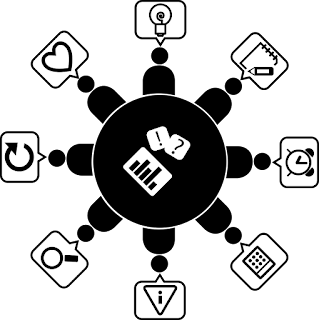
Discussion forums are a significant part of online courses, but only 66% of respondents say that forums are engaging, highlighting an opportunity for improvement. (Learning House, 2019)Most of us have been there both as student and instructor. How do you ignite a cold discussion board so that it invites all attendees to not just participate, but genuinely and with authenticity?

This discussion board grading rubric has proven helpful in multiple disciplines and academic fields. The benefits of this linear rubric are:
- It invites timeliness, often lacking in traditional discussion assignments. Late participation makes engagement nearly impossible. The early bird gets the worm!
- Even latecomers can score points, but they have to work for them. In order to add to the discussion, one has to have done the reading as well as processed all posts to date. There's lots of cognition built into that analytic process of determining what they can add or ask.
- It's simple to understand and a breeze to use while grading.
- It transforms a collection of traditional soliloquy or monologue-style discussion posts into interactive discussions more likely to prepare students for professional discussions around meetings or conferences.
If you have questions about making your discussions more engaging, please send an email to helpdesk@uah.edu for assistance. Please specify if your course is on-ground, hybrid, or online for the most appropriate and fastest response.
Tuesday, October 29, 2019
SURVEY RESULTS: Faculty Acceptance of Online Learning from Inside Higher Ed
In Professors' Slow, Steady Acceptance of Online Learning: A Survey, Inside Higher Ed dives deeply into the data. Sometimes revolution feel more like evolution. But that's okay, because we're moving in the right direction! Fascinating read for those with opinions on either side of the debate.

“Embrace” is probably too strong. “Acquiescence” suggests too much passivity. Whatever word you choose, though, the data indicate that American faculty members -- whether grudgingly or enthusiastically -- are increasingly participating in and, to a lesser extent, accepting the validity of online education.

ePortfolio Tip Sheet for Students
I love using the e-portfolio as a final project in my courses, regardless of what I teach. Each module is intended to build a piece of that final deliverable that mimics authentically the challenges a student might face in their professional roles after graduation.
As students submit module assignments and incorporate feedback over the semester, they aggregate their feedback-applied final products into a linear or montage collection of samples of real work. Because I stress its value to them in applying for scholarships, programs, degrees, and jobs, they put a bit more time and energy into getting it right. And because I provide the rubric at the beginning of the semester by which the final product will be graded—and timely incremental feedback through the building stages—the final product is almost invariably A-quality.

5 Design Principles for Building Your First Portfolio is a tip sheet for e-portfolio construction that might help you help your students. We will be adding it to the broader Student Learning Guide to Multimedia Production that is available to any instructor to insert into their course who wants to provide it as instruction and support with assignments that involve multimedia production. We welcome comments (and questions via comments) on the document itself or by emailing OnlineLearning@uah.edu!
As students submit module assignments and incorporate feedback over the semester, they aggregate their feedback-applied final products into a linear or montage collection of samples of real work. Because I stress its value to them in applying for scholarships, programs, degrees, and jobs, they put a bit more time and energy into getting it right. And because I provide the rubric at the beginning of the semester by which the final product will be graded—and timely incremental feedback through the building stages—the final product is almost invariably A-quality.

5 Design Principles for Building Your First Portfolio is a tip sheet for e-portfolio construction that might help you help your students. We will be adding it to the broader Student Learning Guide to Multimedia Production that is available to any instructor to insert into their course who wants to provide it as instruction and support with assignments that involve multimedia production. We welcome comments (and questions via comments) on the document itself or by emailing OnlineLearning@uah.edu!
Tuesday, October 22, 2019
VIDEO: Accessibility & Academic Continuity (+ Video editing strategies!)
This week I created a 20-minute presentation for New Faculty Orientation, to be delivered in a face-to-face setting for those full-time faculty able to attend. But for those not able to attend, and for part-time faculty also not able to drop in, I recorded this quick Screencast-o-Matic master video shared in Canvas.
I captioned and posted it quickly to ensure immediate access to the content, but will further refine it by dividing it into two videos (one for each topic) that can be used individually or in conjunction with each other.
Best practice for video length is generally 5-7 minutes, but two 10-minute videos would work well here as well. This video can be used until my updated versions are ready. I'll need to recheck my captions for accuracy, and update anyplace where it has been embedded. This is why spreadsheet records of each video (and where it is placed) are such a timesaver!
Tuesday, October 15, 2019
Silencing Voices
Julian Stodd, "writer, researcher, (and) Captain at Sea Salt Learning" writes in "Silencing Voices:"

Perhaps when we consider the silent voices, we should distinguish between those that are drowned out, and those that simply never shout out at all. Self censured, not silenced.

If you need help finding ways to create and sustain dialog in your classes, contact ETL by emailing helpdesk@uah.edu and letting us know how we can help!
Tuesday, October 8, 2019
More free graphics!
Need additional resources for spicing up your course content visually? Here are 7 best illustration resources to use in your web design projects (including course work!).

Still can't find what you need? Drop us a line at OnlineLearning@uah.edu and we'll do our best to help!
Still can't find what you need? Drop us a line at OnlineLearning@uah.edu and we'll do our best to help!
Tuesday, October 1, 2019
UDL-IRN: It's happening!

Anyone interested in learning more about Universal Design for Learning (UDL) is encouraged to check out this virtual (one-day online) conference and the organization forming around implementation of and research within the UDL community. You'll be hearing a lot more about UDL and ADA accessibility in coming months! These are great resources to bookmark even if you don't have the time this semester. The conference fee is only $20, so you really can't lose!
For more information on how to implement UDL and ADA accessibility into your course, contact HelpDesk@uah.edu to schedule an appointment with the specialists best suited to your needs.

Tuesday, September 24, 2019
Lightening the (Cognitive) Load
This great quick read about integrating fun graphics into curricula applies to online learning as well as classroom course materials for on-ground or hybrid course modalities. Check out Bitmojis, GIFs, and Snaps in the Classroom? Oh My! from Magna Publications.
You can create a FREE Bitmoji (see mine below) and have (still free) access to thousands of images to use in announcements, slide decks, ... even blog posts! Bitmoji has free apps for both Android and Apple iOS devices and can be used in any software that supports graphics. While setting up your own Bitmoji, once you find a Bitmoji that looks sort of like you, you can even customize the details to look EERILY like you! I was even able to find my trademark cat-eye glasses!
You can create a FREE Bitmoji (see mine below) and have (still free) access to thousands of images to use in announcements, slide decks, ... even blog posts! Bitmoji has free apps for both Android and Apple iOS devices and can be used in any software that supports graphics. While setting up your own Bitmoji, once you find a Bitmoji that looks sort of like you, you can even customize the details to look EERILY like you! I was even able to find my trademark cat-eye glasses!
Tuesday, September 17, 2019
Learning Tools You May Have Missed
I confess that while many of these technology tools are like extensions of my own hands now, some of them are new to me. Let's check them out!

This link to the lists of the top 200 academic technology tools for 2019 could have gone directly to the sublist specifically for higher education, but then you might have lost the introduction and context of other lists, if curious. I was!
Tuesday, September 10, 2019
The Collaborative Learning Center Needs Your Voice!
Please fill out the faculty survey on collaborative learning in your class. We need the information you are providing to demonstrate we are executing our Quality Enhancement Plan as part of our SACSCOC accreditation. Even if you are not doing collaborative learning, please take the survey.
If you are interested in incorporating or expanding collaborative learning in your course but don’t have a good idea of how to do it or time to research it, please contact the Collaborative Learning Center at x5203 or clc@uah.edu.

If you are interested in incorporating or expanding collaborative learning in your course but don’t have a good idea of how to do it or time to research it, please contact the Collaborative Learning Center at x5203 or clc@uah.edu.

Tuesday, September 3, 2019
Skill Development: Google Searches
Some people might think that using a search engine is as easy as finding the Google Web page and typing a few words into the query field for searching. It's true that these steps will likely yield an avalanche of responses, but those could take a year or two to pick through!
Most of us have figured out that there's a trick to making search engines work smarter, but for some of us, discovering those tips and tricks requires more time and effort than we have to spare.
Here's a great starter video to whet your appetite. There are lots of resources available to take this training to the next level, and what's good for the teacher is also good for the student (and vice versa)! As you learn the ins and outs of search engines yourself, think about ways that you could incorporate such skill-building into your class.
Stuck for ideas? Contact ETL by emailing helpdesk@uah.edu.
Tuesday, August 27, 2019
Digital Storytelling in Teaching & Learning
Our esteemed UAH colleague Dr. Laurel Bollinger contributed this week's resource for faculty interested in folding (digital) storytelling into their curriculum. Storytelling is as old as humankind, no doubt, and storytelling for instruction as old as instruction itself. It's not a new idea to incorporate storytelling into curriculum, but digital storytelling is a fairly new phenomenon with ever-changing toolsets and resources, as well as applications for both formal and informal educational experiences. And it's not hard to accomplish!
The University of Houston offers public access to web resources devoted to supporting digital storytelling both as a means of instruction as well as a tool for learning assessment.
And if that's not enough to whet your appetite, check out the 30 Sites and Apps for Digital Storytelling!
For support with integrating storytelling into your teaching and learning, please visit ETL or email Tess.Olten@uah.edu.
The University of Houston offers public access to web resources devoted to supporting digital storytelling both as a means of instruction as well as a tool for learning assessment.
And if that's not enough to whet your appetite, check out the 30 Sites and Apps for Digital Storytelling!
For support with integrating storytelling into your teaching and learning, please visit ETL or email Tess.Olten@uah.edu.
 |
| Photo by You X Ventures on Unsplash |
Tuesday, August 20, 2019
Screencast-o-Matic on a Surface Pro
This should have special meaning for those in math, science, and engineering who have been frustrated by the keyboard limitations of various types of academic technologies and wish for a smooth surface upon which to write complex formulas and diagrams while recording lecture video!
Interested in learning how to create high quality video right on your desktop, laptop, iPad, or Surface? Contact Tess.Olten@uah.edu for more information and to get started!
Interested in learning how to create high quality video right on your desktop, laptop, iPad, or Surface? Contact Tess.Olten@uah.edu for more information and to get started!
Tuesday, August 13, 2019

Tuesday, August 6, 2019
What the World Needs from Education (Medium/OL Weekly)
From my beloved OL Weekly by e-learning guru Stephen Downes:

Marc Prensky knows how to make a big statement. Here's his latest: "People, In the future, will increasingly mean newly empowered symbiotic human hybrids who can, as individuals and teams, apply the strength of their unique blends of human and technology components to creating new and positive value and solutions to local and global problems.
“The big issue for the world is not to create more or new jobs, but to figure out effective ways for people to be compensated for whatever series of world-improving projects they want and choose to do.”
Can't say I disagree with him.
See also: The No-Collar Workforce, Deloitte.What the World Needs from Education is a little deeper dive than usual blog fare, but it's worth the time. It provides a framework for moving forward through the technological evolution and its pedagogical impact on teaching and learning, but also the world beyond degree attainment. This piece forces us to reevaluate our objectives for ourselves and for our learners.
Symbiosis with technology — i.e. tools becoming indispensable parts of us — is, of course, the story of human development. The question of what we keep in our human heads (i.e. our dreams, passions, compassion, warmth, kindness, good, ethical behavior) and what we delegate to our extensions (e.g. calculation, memory, speed, accuracy, analysis, connection) has been a human issue since the invention of the abacus and writing. Today this integration is speeding up incredibly.
Finding new evolving integration opportunities — and realizing them seamlessly — is perhaps the most crucial task for humans in the coming years and centuries. It is what will lead to the solutions of all our pressing problems, which neither technology alone, nor humans unintegrated with it, will be able to fully deal with. Helping each individual find his or her unique, appropriate and ideal “style” of hybrid symbiosis is perhaps the central challenge of future education. And yet, no one has adequately addressed the issue in those terms.

Tuesday, July 30, 2019
The Top Five Competencies for Faculty Innovation, Plus Five More

What are the core competencies that faculty innovators need in order to be successful in making sustained changes in and beyond their classrooms? While sitting under the starry Arizona desert sky near Bioshphere 2 during an NSF-sponsored workshop focused on the intersections of STEM education; diversity, equity, and inclusion; and innovations in learning, we decided to bring this question to our colleagues working in higher education learning innovation.Can't stand the suspense? See the full list at Educause Review.
(May require login; faculty and staff of Educause member universities like UAH may create a profile at no cost to log in.)
Tuesday, July 23, 2019
7 Strategies to Promote Community in Online Courses
Straight from MAGNA Faculty Focus to you: 7 Strategies to Promote Community in Online Courses.
It's easy to see why building community can lead to enhanced learning outcomes, but a lot more challenging to figure HOW and with which tools to accomplish these goals. If you need help building community in your on-ground, hybrid or online course, contact Enhanced Teaching and Learning! Between the Collaborative Learning Center, Online Learning, and Academic Technologies, we've got everything you need to ensure both yours and your students' success! Email Tess.Olten@uah.edu for more information and guidance.

It's easy to see why building community can lead to enhanced learning outcomes, but a lot more challenging to figure HOW and with which tools to accomplish these goals. If you need help building community in your on-ground, hybrid or online course, contact Enhanced Teaching and Learning! Between the Collaborative Learning Center, Online Learning, and Academic Technologies, we've got everything you need to ensure both yours and your students' success! Email Tess.Olten@uah.edu for more information and guidance.

Tuesday, July 16, 2019
Google Partners with Be-My-Eyes
If you're not already familiar with Be-My-Eyes, it's an app-based service that connects sighted volunteers with those visually challenged to solve everyday problems like reading food and prescription labels, choosing attire, finding one's way along a busy street or navigating an ATM transaction.

Now Google has partnered with Be-My-Eyes and is providing virtually instantaneous video support for online assistance with accessibility and accommodation for users with visual impairment.
The idea of “calling Google” might be new to some people – but thanks to a new partnership launched in March 2019, Be My Eyes users can now establish a video link with a Google accessibility expert in seconds.

Tuesday, July 9, 2019
Academic Continuity: Have you got a plan?

Campus closures can happen for a variety of reasons and are usually unexpected. Do you have an academic continuity plan for your course should disaster strike?
Check out one professor's experience when it became necessary to teach through a hurricane!
The unexpected emotional and physical upheaval caused by a hurricane at the beginning of an academic year was challenging for many institutions in the Carolinas. One faculty member shares the lessons he learned and describes how the experience has shaped his approach to teaching.
Tuesday, June 4, 2019
Tuesday, May 28, 2019

Tuesday, May 21, 2019
The Genius of a Good Graphic (TED Talk)
Directly from TED.com:
In a talk that's part history lesson, part love letter to graphics, information designer Tommy McCall traces the centuries-long evolution of charts and diagrams—and shows how complex data can be sculpted into beautiful shapes. "Graphics that help us think faster, or see a book's worth of information on a single page, are the key to unlocking new discoveries," McCall says.
Tuesday, May 14, 2019
Do you have what it takes?
I snagged this one from the venerable Stephen Downes' OLWeekly and must share his anecdote as introduction to the study:

My first reaction was to roll my eyes when I read the title of this paper, because the designation of 'award winning' professors is unscientific at best. I remained sceptical on reading about the "five different roles: facilitator, course designer, content manager, subject matter expert, and mentor," because I know there's a lot more than that. But persisting with it paid off as it turns out to be an interesting and thorough article. There's a good (though not comprehensive) list of competencies (table 4) and an emphasis on the need for quality online instructors to be strong online learners themselves. The authors write, "Our study emphasizes the need for instructors to maintain a strong willingness to learn and grow in their pedagogical and technology skills. This requires seeing oneself as a lifelong learner, allotting time to learn about online teaching and learning, staying abreast of the latest research, theories, and techniques of teaching online, experimenting with technologies, making mistakes and learning from them." Too true.
Award-Winning Faculty Online Teaching Practices: Roles and Competencies provides a robust and comprehensive framework for preparing faculty for online teaching and learning.

Tuesday, May 7, 2019
UX: User Experience (& Why it Matters)
From the Interaction Design Foundation:
The IDF maintains a working (and dynamic) definition of UX and bountiful guide to its principles and resources at its UX Design site. Worth bookmarking and sharing!

User experience (UX) design is the process of creating products that provide meaningful and relevant experiences to users. This involves the design of the entire process of acquiring and integrating the product, including aspects of branding, design, usability, and function.As educators, it behooves us to think about UX and to apply the basic principles of sound UD (Universal Design) to any coursework we put online whether for an on-ground, hybrid, or asynchronous online course. UX goes beyond but includes issues of ADA accessibility and acknowledges and addresses the vast differences in how humans interact with digital content. It stands to reason that a well designed user experience can only benefit teaching and learning outcomes.
The IDF maintains a working (and dynamic) definition of UX and bountiful guide to its principles and resources at its UX Design site. Worth bookmarking and sharing!

Tuesday, April 30, 2019
Writing vs. Writing
As a student and educator for the past 20 years or so, I've seen the traditional world of academia both embrace and resist technology on myriad fronts over the decades. This one is a classic struggle between traditionalists and those more progressive faculty who understand that the world is changing around us, whether we participate in that change or not.
I offer this piece for consideration not only by those responsible for teaching English and writing, but by those teaching in all academic fields. All the expertise in the collective field of an(y) academic area is worthless unless one can communicate it effectively to both colleagues within one's field of expertise/study and to a greater public audience, when appropriate.
Tell Me a Smart Story: On Podcasts, Videos, and Websites as Writing Assignments takes the concept of writing to "new millennial" levels with the actual experiences of one instructor whose iterative approach to integrating multimedia as assignment options for students led to breakthroughs for both her and her learners. (Be sure to read the comments on the post as well!)
 Worth a try? For ideas on how to integrate multimedia creation into your course assignments or assessments, contact Tess.Olten@uah.edu.
I offer this piece for consideration not only by those responsible for teaching English and writing, but by those teaching in all academic fields. All the expertise in the collective field of an(y) academic area is worthless unless one can communicate it effectively to both colleagues within one's field of expertise/study and to a greater public audience, when appropriate.
Tell Me a Smart Story: On Podcasts, Videos, and Websites as Writing Assignments takes the concept of writing to "new millennial" levels with the actual experiences of one instructor whose iterative approach to integrating multimedia as assignment options for students led to breakthroughs for both her and her learners. (Be sure to read the comments on the post as well!)
Skeptics will, I’m sure, insist that podcasts, videos, and websites are not writing assignments.
I would argue that they absolutely are. They require students to organize materials in a similar way and to literally write out their scripts. And just because these arguments are not made in a dry, formal prose style doesn’t mean they aren’t effective or smart. In most cases, I’ve found that students who choose to do one of these nontraditional research projects are making better arguments and end up putting a lot more effort into the overall project.

Subscribe to:
Posts (Atom)
-
 In ReviewGeek.com 's Google Drive Has Quietly Become One of the Best Backup Options Around , I'm reminded that not everyone knows ab...
 -
 What is AI? What is it not? How do we approach teaching with AI in mind? How do we prepare our students to live, work, and thrive in a world...
 -
 I love using the e-portfolio as a final project in my courses, regardless of what I teach. Each module is intended to build a piece of that ...